


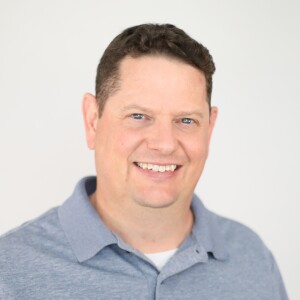
BILLINGS — Grant Grosvenor’s college running résumé read like a highlight reel of middle-distance excellence:
All-American. Two-time NCAA championship qualifier. Big Sky Conference champion in the 800 meters. Montana State record-holder in the 800, 1,500 and distance medley relay. Indoor national champion in the DMR at Oregon. Team national champion with the Ducks. A 2016 U.S. Olympic Trials competitor.
But to reach peak performance a decade after accomplishing all that? No way.
“This is all gravy,” Grosvenor told MTN Sports during a Zoom interview from Australia where he trains. “I didn’t know I was going to have all this.”
WATCH THE VIDEO:
That's because Grosvenor spent much of the past decade drifting away from the sport as he battled substance abuse, bounced between jobs and stopped training for five years — only to return in his 30s, sober and refocused, to run faster than he ever did in college.
Grosvenor, now 33, reached a major milestone by achieving a sub-four-minute mile at the UW Mile City event in Seattle in January. In the realm of running, this was a huge accomplishment, a rare benchmark even for elite athletes and an almost unheard-of breakthrough for someone his age doing it for the first time.
According to Grosvenor — now a member of Fast 8 Track, an Australia-based 800-meter training group — he is believed to be the oldest man still living to accomplish the feat and the second-oldest to ever do it.
“Breaking four was never something I thought I’d be doing in my 30s,” Grosvenor said. “At that point you’re supposed to be on the way down, not running the best races of your life.
“For me it’s proof that if you take care of yourself and really commit, you can still find another level long after people think you’re done.”
You might remember Grosvenor. A Washington native, he arrived at Montana State in the fall of 2011 and emerged as one of the top middle-distance runners in the program. He piled up school records in the 800, 1,500 and distance medley relay, won a Big Sky title and raced his way to All-America status and two NCAA championship appearances.
By the time he left Bozeman, he’d firmly stamped his name across the Bobcats’ record books.
“Montana will always have a special place in my heart,” he said. “I miss Bozeman a lot.”
Seeking a bigger stage, Grosvenor transferred to Oregon in 2014 and joined one of the premier track programs in the country. The move paid off. He helped the Ducks win an indoor national title in the distance medley relay and contributed to a men’s team championship.
He finished second in the 800 at the Pac-12 championships and pushed himself into the national conversation as one of the better middle-distance runners in college track.

But Grosvenor battled through a rough first year in Eugene off the track, including a medication issue that stunted his performances. He even spent time training with Oregon’s women’s sprint team because of a scheduling quirk — a humbling experience he now laughs about.
Once he settled in, his times took off. By 2016 he was chasing a spot at the U.S. Olympic Trials.
That’s where the arc turned. Grosvenor’s personal best in the 800 — 1 minute, 47 seconds — left him three spots shy of the trials cutoff. The top 36 athletes got in. He was 39th.
“I thought I was going to make it easy,” Grosvenor said. “I was shocked I couldn’t qualify. All of a sudden I was just kind of dropped to the streets. The career was over. There was nothing.”
He landed a job at Nike just as recreational marijuana was legalized in Oregon, and the void left by the end of his competitive career quickly filled with something else. The structure of training and racing was replaced by long workdays and longer nights.
“I just kind of let it rip,” Grosvenor said. “I was pretty much smoking every day and drinking quite a bit. The whole experience of going into the work world, having the NCAA running career just cut short, it really weighed on me.”
A later move to Seattle only deepened the spiral. He found a job where the harder he worked, the more he got paid, but the company’s culture revolved around a “work hard, party hard” mentality. Weed and alcohol became part of his routine, and the distance between who he was and who he’d been as an athlete grew wider.
“It’s nobody’s fault but my own,” he said. “I just didn’t know I was in it.”
Every so often, Grosvenor would wander into the office gym, step on a treadmill and try to summon a glimpse of his old self. That never lasted long.
“I’d go down and run four or five minutes and see how that would feel,” he said. “I really didn’t enjoy exercise. My relationship with exercise was bad. If I was going to exercise, I felt like I had to feel like I did in college. And that’s just not what it was.”
When the COVID-19 pandemic hit, Grosvenor was on vacation in San Diego. Instead of heading home, he stayed. With tourism at a standstill, beachfront property was cheap.
“Airbnbs were like $10 a night on the beach,” he said. “If I’m down here, I’m not going to go back.”
The change of scenery became an unlikely lifeline. With the ocean in front of him and fewer distractions, he started moving again and slowly reconnected with fitness. But when he eventually returned to Seattle and a fully remote work setup, the old habits didn't die.
“With remote work, there was no Saturday, Sunday,” he said. “Every day was a Saturday.”
Alcohol, marijuana and nicotine filled his space again. Eventually, Grosvenor recognized how far off course he’d drifted.
“I kind of felt myself going down the wrong path,” he said. “I picked up everything I owned and told my roommate, who was my landlord, ‘I've got to get out of here. It’s just not a good scene for me.‘”
He packed his car and drove to Arizona with one goal in mind — to start over. There he rebuilt his routine from scratch and laid the groundwork for a return to competitive running. Getting sober changed the trajectory of his life and career.
Grosvenor was soon training twice a day. He met a marathon runner who supported his gradual return to the track, and within about six months he jumped into his first race in years. It was ugly, he said, but the feeling of competing again hooked him, and not long after that he ran the fastest 800 meters of his life.
As the miles and workouts stacked up and as sobriety sharpened his focus, his times kept dropping. He lowered his PRs in the 800 and 1,000 meters and, a decade after his college peak and five years removed from serious training, he lined up at the the UW Mile City event on Jan. 31, 2026, and finally broke the four-minute barrier in the mile, stopping the clock at 3:58.58.
“I never thought I’d be back in it like this,” Grosvenor said. “For five years I was so far away from the sport that lining up again felt like a different life. Once I got that feeling of competing back, it was like, ‘OK, this is my new drug now.’ I just wanted to see how far I could take it.”
A remarkable comeback, to be certain. But it wasn’t the only time Grosvenor was forced to reevaluate his life.
Last fall while training in Australia, he found himself at the center of a tragedy. On what was supposed to be a final, low-key day in the country, he flew from Melbourne to Sydney, headed down to Bondi Beach and walked toward a favorite spot for food near the pavilion.
A brief conversation with two women on the sand delayed him just long enough that, within seconds of saying goodbye, he heard what he first thought were fireworks or a car backfiring. The sound was gunshots.
Two men opened fire during a Jewish Hanukkah celebration, and Grosvenor suddenly found himself sprinting for safety, hugging a wall, dodging panicked crowds and riding a rental bike back to his hotel.
The attack took the lives of 15 people, including a Holocaust survivor and a 10‑year‑old child.
“When you realize it’s gunshots, you don’t know where they are or if they’re at you,” Grosvenor said. “In that moment it was like, ‘This could be it. This could be my last day.’ After that, so many things just didn’t matter anymore, and only a couple things really did — being alive, being with my family, actually being present.
“It sounds backwards, but coming out of that gave me a totally different perspective and, in a weird way, a bit of a superpower.”
With that in mind, Grosvenor will continue to chase fast times and big goals for as long as his legs and lungs allow. Why stop now?
His career resurgence has already produced some incredible moments — a sub‑4:00 mile at 33, personal-best times and the chance to line up against some of the best runners in the world.
